

Global Solar Leaders Convene to Advance the Next Phase of PV Manufacturing Collaboration
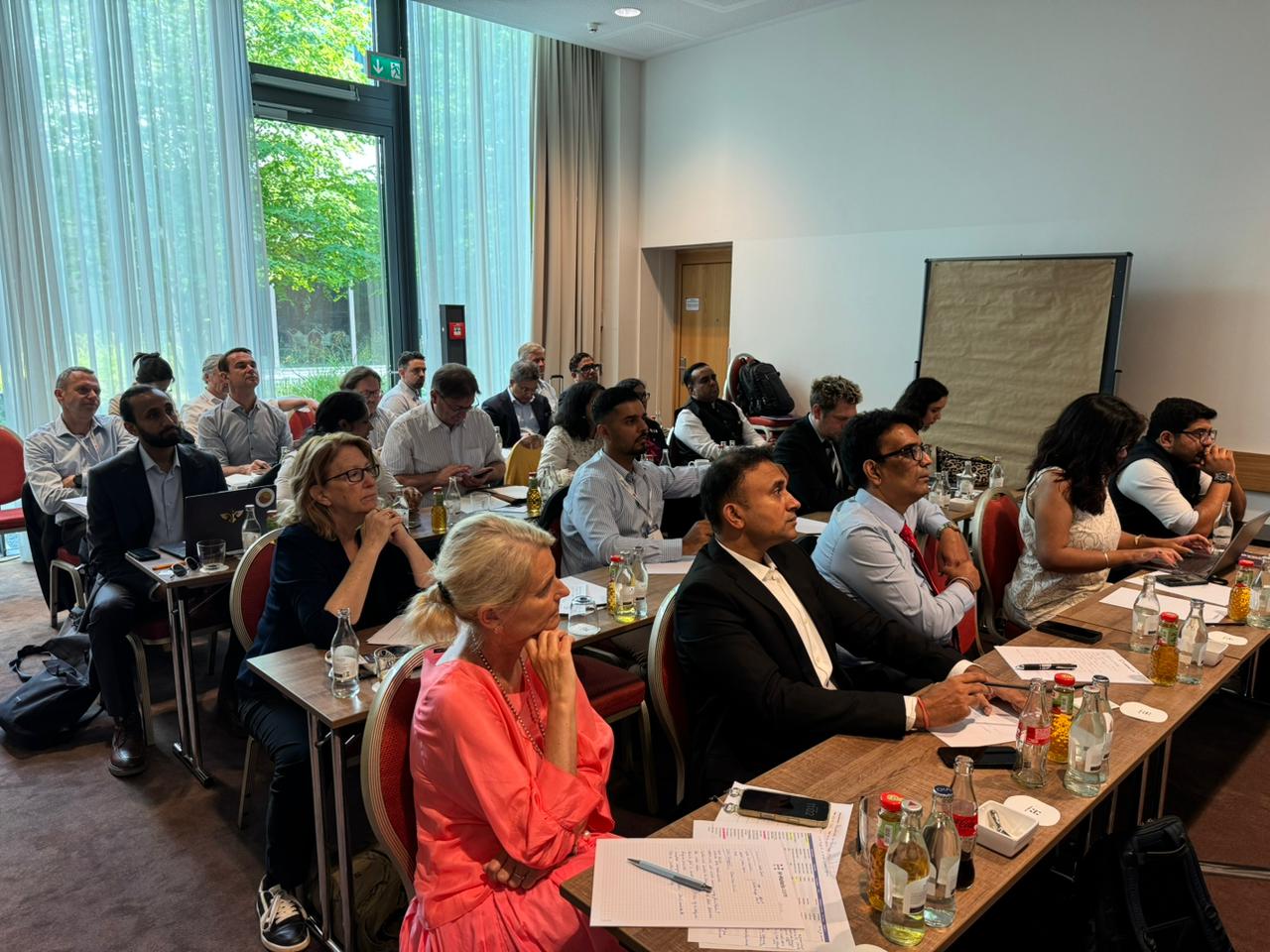
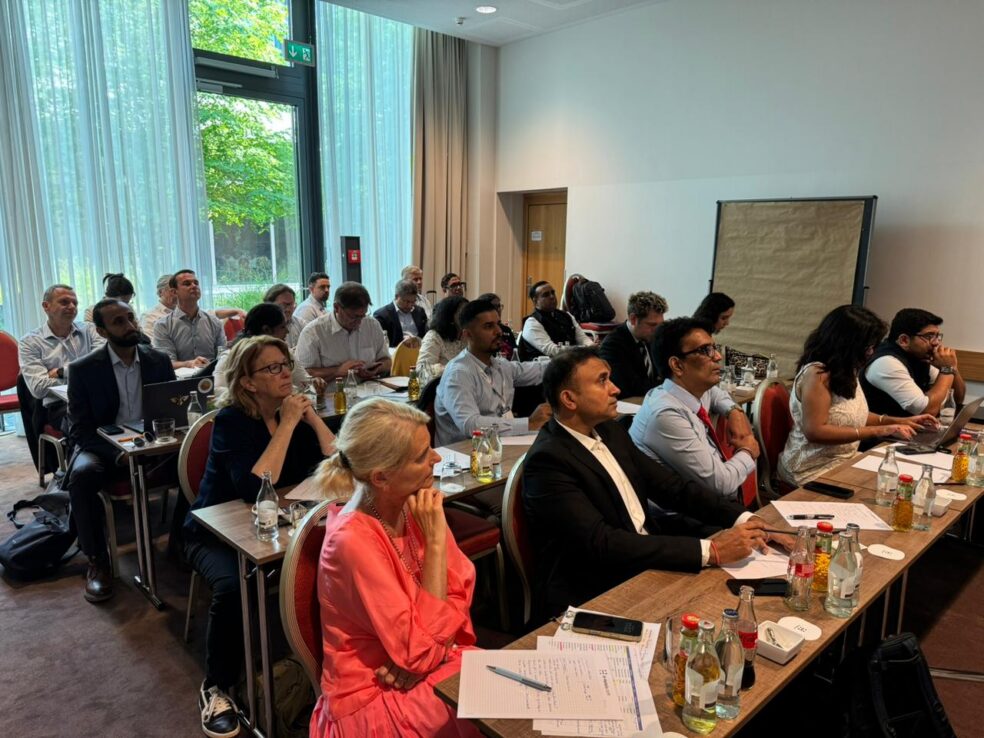
On 23 June 2026, EAC International Consulting convened a closed-door CEO Roundtable titled Building Global PV Supply Chain Resilience: The Role of Emerging Manufacturing Ecosystems. Held during Intersolar Europe week, the roundtable brought together global industry leaders already present in Munich to discuss the next phase of resilient and diversified PV manufacturing supply chain.
Co-organised with the National Solar Energy Federation of India (NSEFI), the International Solar Alliance (ISA), and the Global Solar Council (GSC), the roundtable convened PV manufacturers, equipment suppliers, technology providers, research institutions, and industry associations from across the global solar value chain. The two-hour session brought together voices from India, Europe, and beyond, creating a focused platform for dialogue on the future of diversified and resilient PV manufacturing.
The discussion opened with context-setting presentations by Al Mudabbir Bin Anam (ISA), Abdallah Alshamali (GSC), Anup Barapatre (EAC), and Shubhang Parekh (NSEFI), followed by a moderated open forum led by Erik Solheim, Global Ambassador of the Global Solar Council, and co-moderated by Mudabbir Anam.
Participants engaged candidly on questions that are shaping the next phase of solar industry development: how diversified manufacturing ecosystems can strengthen long-term resilience; where the most meaningful opportunities lie for cross-border collaboration in upstream PV manufacturing; and what partnership models have proven effective in scaling competitive capabilities.
The conversations were substantive and far-reaching, reflecting a shared recognition that the next phase of solar manufacturing competitiveness will not be determined by scale alone. Instead, competitive advantage will increasingly depend on industrial depth, technology partnerships, engineering capabilities and resilient innovation ecosystems.
As global manufacturing ecosystems evolve beyond capacity expansion, the discussion underscored the growing importance of cross-country ecosystem collaboration in shaping long-term competitiveness.
White Paper Launch: Building the Next Solar PV Manufacturing Frontier
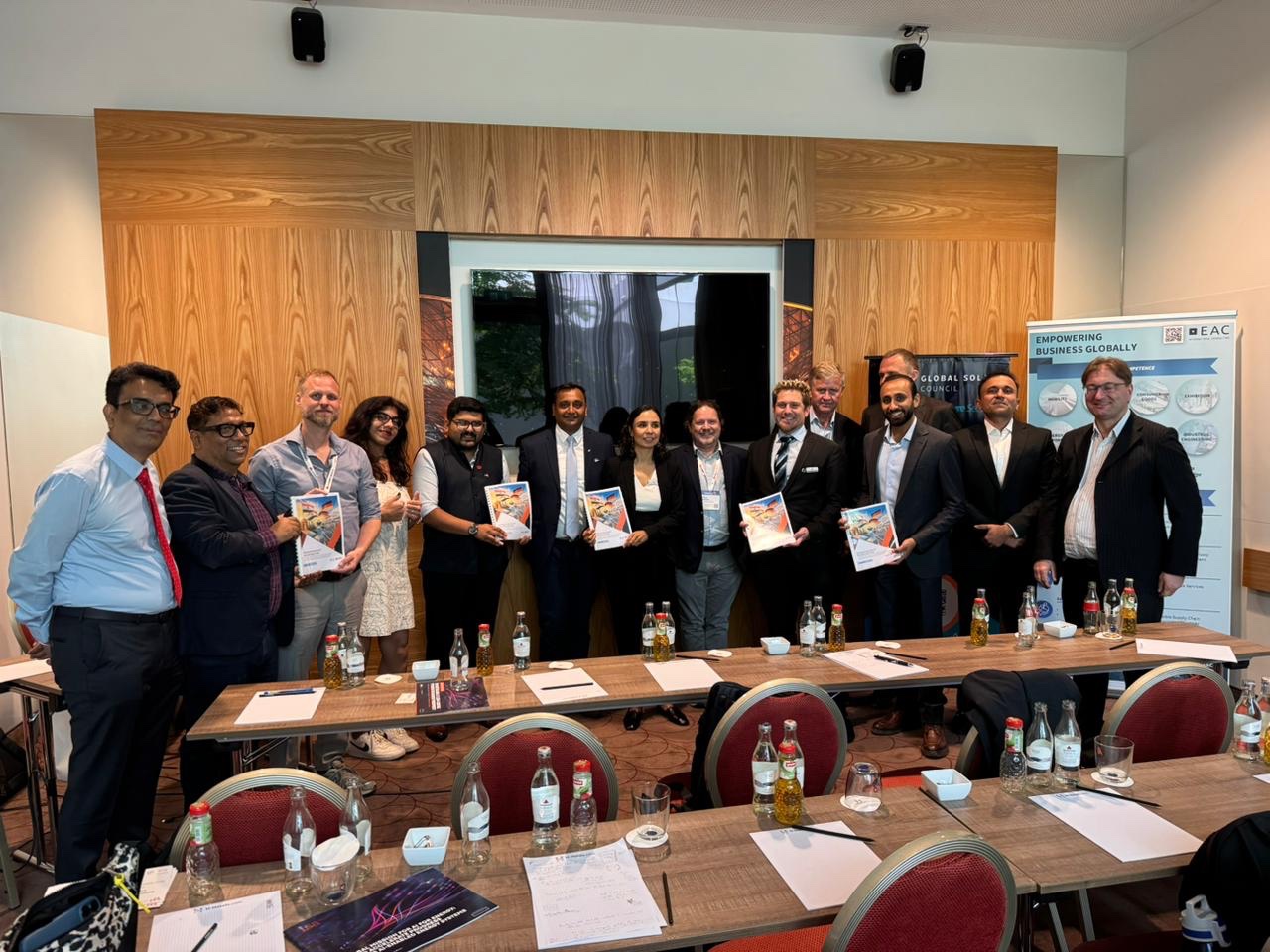
The roundtable coincided with the formal launch of EAC's white paper “Building the Next Solar PV Manufacturing Frontier: How India and Germany Can Jointly Strengthen Global Solar Manufacturing Competitiveness” developed in partnership with NSEFI and supported by knowledge partners VDMA Photovoltaics Equipment and BSW (German Solar Association).
The paper explores how India's rapidly expanding manufacturing base and Germany's deep industrial expertise in technology, equipment, and process know-how can create complementary value across the solar value chain. It maps India's four-stage solar evolution from deployment leadership toward upstream integration and ecosystem formation against Germany's transition from manufacturing scale toward technology and innovation leadership, identifying where the two ecosystems intersect most productively. Rather than presenting a static market assessment, the paper proposes a practical framework for long-term collaboration between industry, technology providers, research institutions and ecosystem partners.
The white paper is positioned not as a conclusion, but as the beginning of a structured, industry-led collaboration process aimed at translating strategic dialogue into practical industrial initiatives across the global solar manufacturing ecosystem
To request a copy of the white paper, please write to Anup Barapatre or Rituraj Shailendra.
Latest
India’s Maritime Transformation: Logistics, Manufacturing, and Indo‑German Collaboration
Why Hyper-Localization is the New Playbook for International Success in China

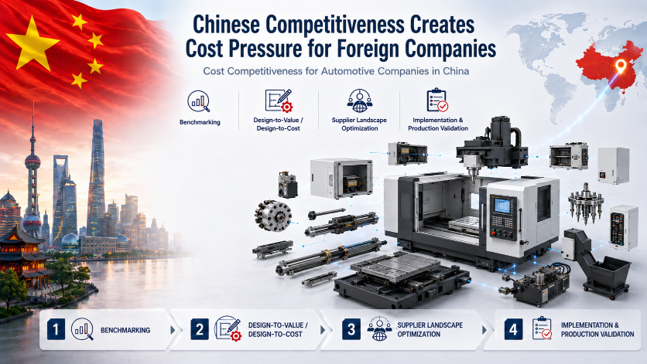
China Cost Optimization 2026 – Balancing competitiveness in a shifting landscape
India’s Industrial Decarbonisation Shift: The Emerging Role of CCUS

Electrifying India: Accelerating the Passenger Electric Vehicle Revolution

India is currently amongst the prominent hubs for automotive manufacturing across globe, however, the Indian EV industry is still in its early stages of development and is expected to exhibit significant growth over the next decade.
By 2030, India will emerge as the 2nd largest manufacturer of passenger electric vehicles in APAC region following China with a surge of +74% in the vehicle production volume.
Passenger vehicle production in India which was 4.6 mio unit in FY’23 is expected to reach 7.2 mio units by FY’30 growing at a CAGR of 7%. During this period, share of battery electric vehicles production is expected to reach 23% (from 3% today) while hybrid electric vehicles would reach 22% (from 11%) with the remaining 55% (from 86%) production share from conventional ICE vehicle.
The key growth drivers for the expected increase penetration of electric passenger vehicles in India can be attributed to
- Strong government push and incentives
- Introduction of new affordable electric models with high customer-perceived value
- Rapid build-up of charging infrastructure across cities, and national highways coupled with reducing range anxiety considering predictable driving patterns
The Government of India (GoI) has announced several initiatives and policies including Faster Adoption and Manufacturing of Hybrid and Electric Vehicle (FAME) in India, Production Linked Incentive (PLI) Scheme for Automotive industry, PLI on Advanced Chemistry Cell (ACC) with the aim to achieve 100% local production of EVs under “Make in India” initiative.
To support EV investment, Indian states are additionally providing incentives under State Industrial Policy such as:
- Fixed capital subsidy
- Stamp duty exemption
- Electricity cost/ duty subsidy
- Water cost subsidy
- SGST/ IGST reimbursement
- Employment incentives and many more
The GoI is committed to achieve 30% electrification of total mobility by 2030. With growing interest of end-users across the EV segments, both Indian and foreign manufacturers are setting-up/ expanding their production plants in India to cater to domestic as well as exports market. In the first 10 months of 2023 itself, companies have announced ~10 bln EUR of planned investments for passenger electric vehicles production and battery assembly.
Few of the key announcements are listed below
- Passenger EV production
- Maruti Suzuki: Aims 20% sales share by 2031; EV capacity expansion to 2 mio units/ year
- Volkswagen: Localise the models planned post 2025
- Hyundai: EV sales share target of 34% by 2030
- Tata Motors: Plans to develop 10 new electric models – sales share target 50% from EV by 2030
- Tesla have rented new office in Pune (Maharashtra) alongside exploring location for manufacturing setup and product sourcing from India
- Battery assembly
- Hyundai: New unit to assemble 178,000 battery pack/ year
- MG: New battery assembly unit in Gujarat
This passenger electric vehicle boom in India offers significant business potential for component manufacturers considering the paradigm shift in component requirements compared to conventional ICE vehicles. This makes it imperative for component manufacturers to make a thorough investigation of the realistic market potential (both domestic and exports) as well as localization feasibility to thereby outline a long-term investment strategy in India.
As the automotive industry is subject to rapid changes and developments, you may connect with EAC for latest news and updates in the division of electrical vehicles and seeking more insights on its industrial reports taking place in India.
Latest
India’s Maritime Transformation: Logistics, Manufacturing, and Indo‑German Collaboration
Why Hyper-Localization is the New Playbook for International Success in China
China Cost Optimization 2026 – Balancing competitiveness in a shifting landscape
India’s Industrial Decarbonisation Shift: The Emerging Role of CCUS