
From Zero Discharge to Zero Water Waste: Key Takeaways from ETM 2026

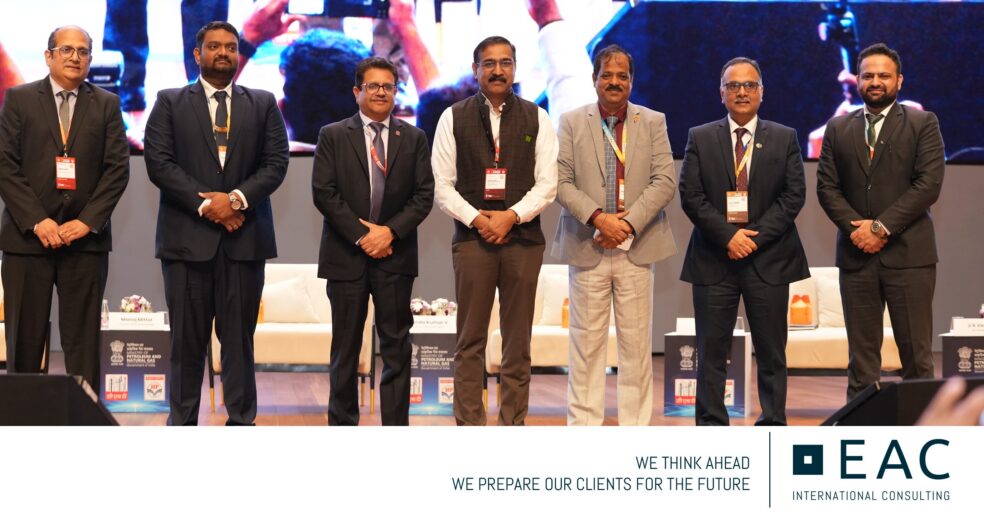
This was the starting point for Plenary XVII, “Water Management: Cost-effective Ways to Reach Zero Discharge,” held on 29 October 2026 at the 29th Energy Technology & Innovation Meet (ETM 2026) in Goa. The meet was organised by the Centre for High Technology (CHT) under the Ministry of Petroleum and Natural Gas, Government of India, and co-hosted by Hindustan Petroleum Corporation Limited (HPCL), under the theme “Accelerating Energy Innovation: From Research to Commercialisation.”
EAC International Consulting supported the meet as Knowledge Partner.
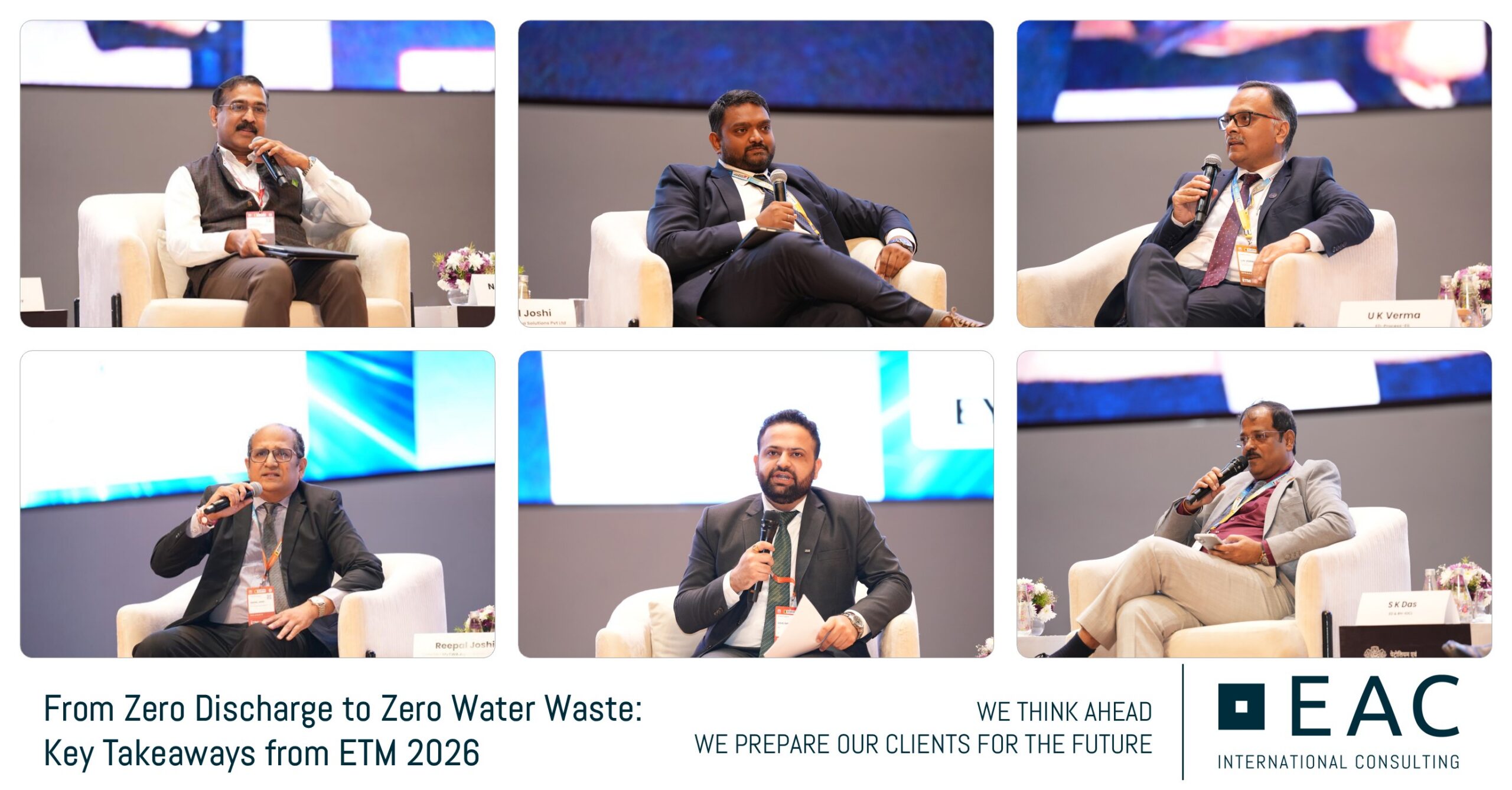
The session was chaired by Nanda Kumar V, Director (Refineries), MRPL, and moderated by Sahil Shridhar, Managing Consultant, EAC. The panel brought together four deliberately different vantage points on industrial water:
- User: Susanta Kumar Das, Indian Oil
- Designer: U K Verma, Engineers India Limited (EIL)
- Technology Provider: Manoj Mittal, Lummus Technology
- Solution provider: Reepal Joshi, MyTWA Aqua Solutions
The question
Zero liquid discharge (ZLD) has become a clear direction of travel for the sector. For many operators, the challenge is not whether to reach zero discharge, but how to get there without capital and energy costs eroding competitiveness.
Key takeaways
Regulation takes you to a level; economics takes you the rest of the way.
For refineries, zero discharge is not a national mandate. It is imposed site by site, through consent conditions, clearance terms and groundwater restrictions. These requirements take an operator to a high level of water recovery, and quickly. Beyond that level, the push to true zero becomes an economic decision, and this is where the cost curve rises most steeply.
The last few per cent carry the heaviest footprint.
Figures presented by Indian Oil’s Haldia Refinery showed that a thermal ZLD train sized for the final fraction requires megawatts of power and tonnes of steam an hour and produces around 100 tonnes a day of mixed salt destined for secured landfill. Zero liquid discharge, in other words, converts a liquid problem into a solid-waste and carbon problem.
The real case is survival, not compliance or cost.
The panel converged on reframing the target from zero discharge to zero water waste: draw less, use every drop better, and keep water within the system.
Measure intensity, not a binary.
A yes-or-no test of zero shows no progress until the last drop. Freshwater intensity and discharge intensity per tonne of crude show who is improving and by how much. Haldia reported 0.49 m³ of water per tonne of crude this year, against an Indian refinery median of 1.76, with crude throughput up 23% and freshwater intake down 56% since FY21.
The session closed on proposals rather than problems. Structured as two linked questions, with each panellist answering from a distinct position in the value chain, the discussion moved beyond diagnosis to a shared reframe: from zero discharge to zero water waste, and from a binary compliance test to measured freshwater and discharge intensity.
Three specific asks were tabled for regulators:
- Fit-for-purpose national standards for non-potable industrial reuse
- Recognition of verified third-party reuse as discharge avoided
- Measurement by intensity rather than a yes-or-no test of zero
For India’s refiners and process industries, the message is clear: water strategy is moving from a compliance function to a question of operational resilience and long-term competitiveness.
EAC thanks the Centre for High Technology for including water management on the ETM 2026 programme, the Chairperson and panellists for an open and constructive discussion.
To discuss water strategy, reuse economics or industrial sustainability for your operations in India, contact the EAC team - Sahil Shridhar, Ankur Vohra, Dr. Rajesh Raut and Komal Jha.
Latest
Food & Beverage: Targeting Southeast Asia?

India’s Maritime Transformation: Logistics, Manufacturing, and Indo‑German Collaboration
Why Hyper-Localization is the New Playbook for International Success in China
China Cost Optimization 2026 – Balancing competitiveness in a shifting landscape