

Operationalising the EU-India FTA: EAC Outlines the When and the How for German Companies at CGI Munich Business Forum
The Consulate General of India, Munich brought together industry leaders at the Hilton Munich City for the forum "India-EU FTA: Advancing Partnerships across Manufacturing and Deep-Tech Sectors". It was held under the theme "Technology for Seva: Building Viksit Bharat", in the spirit of Sewa Pakhwada 2026 and Seva Sankalp Mahotsav. One thought carried through the afternoon: technology and trade should empower rather than overpower.
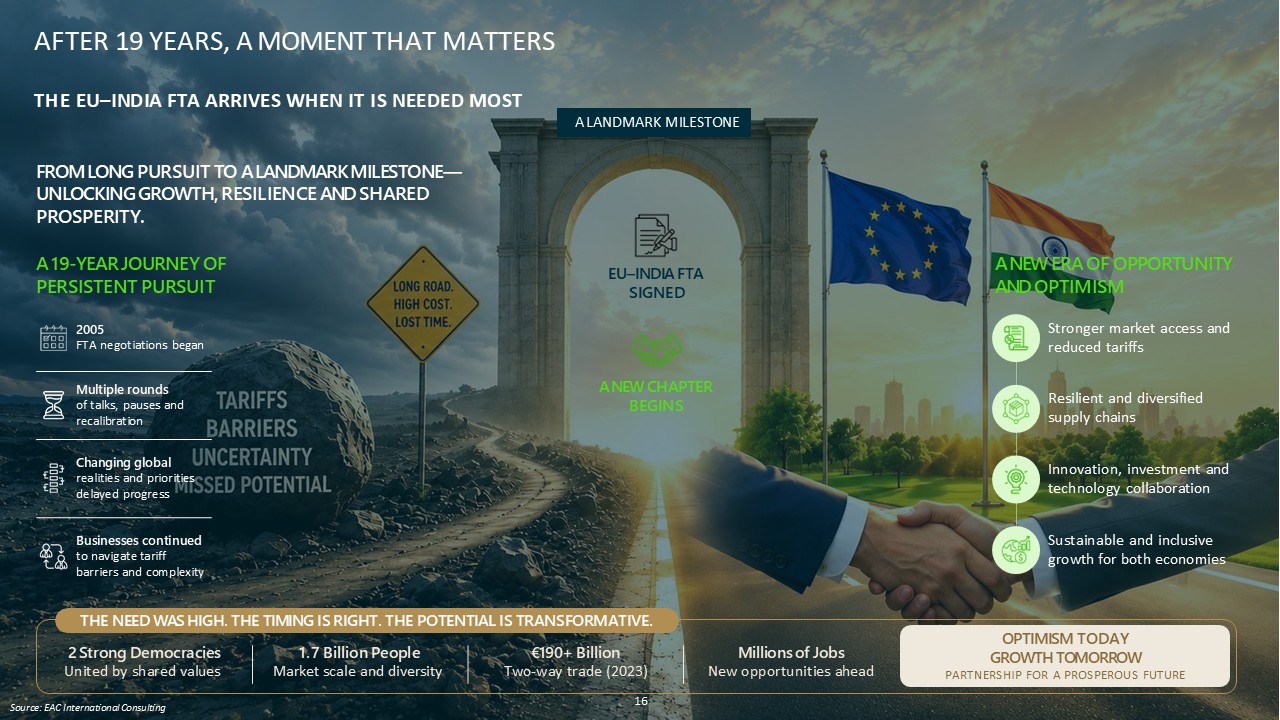
For many German companies, the FTA has so far been a headline. Rituraj Shailendra's session, "Operationalizing EU-India FTA: The When and The How for German Companies' Strategies (2026-2030)", began with a simple observation. India is no longer only a demand story. Its economic weight now influences how global companies design supply chains, allocate capital and build manufacturing footprints.
This is where the tension lies. Despite strong trade linkages and a natural industrial fit, Germany remains underweight in India. Rituraj argued that the cause is not market access. It is caution in how companies structure their operations. The FTA removes much of the uncertainty that has justified that caution.
The foundation is already substantial. The EU and India together account for 17% of global trade and 2.7 billion people, with two-way trade exceeding 190 bln EUR in 2023. EU companies in India already generate 185 bln EUR in revenue and 3.6 million direct jobs. Germany accounts for the largest number of these companies, and around 46% of them are in manufacturing.
The more important part of the session came after the numbers. Those who treat the FTA as a customs exercise will capture only a fraction of its value. Those who treat it as an operating model decision will define their position for the next decade.
Rituraj's advice to leadership teams was practical:
- Map where tariff exposure turns into opportunity
- Re-examine supply chains with India as a China+1 hub
- Build rules-of-origin capability now
- Use the new mobility framework
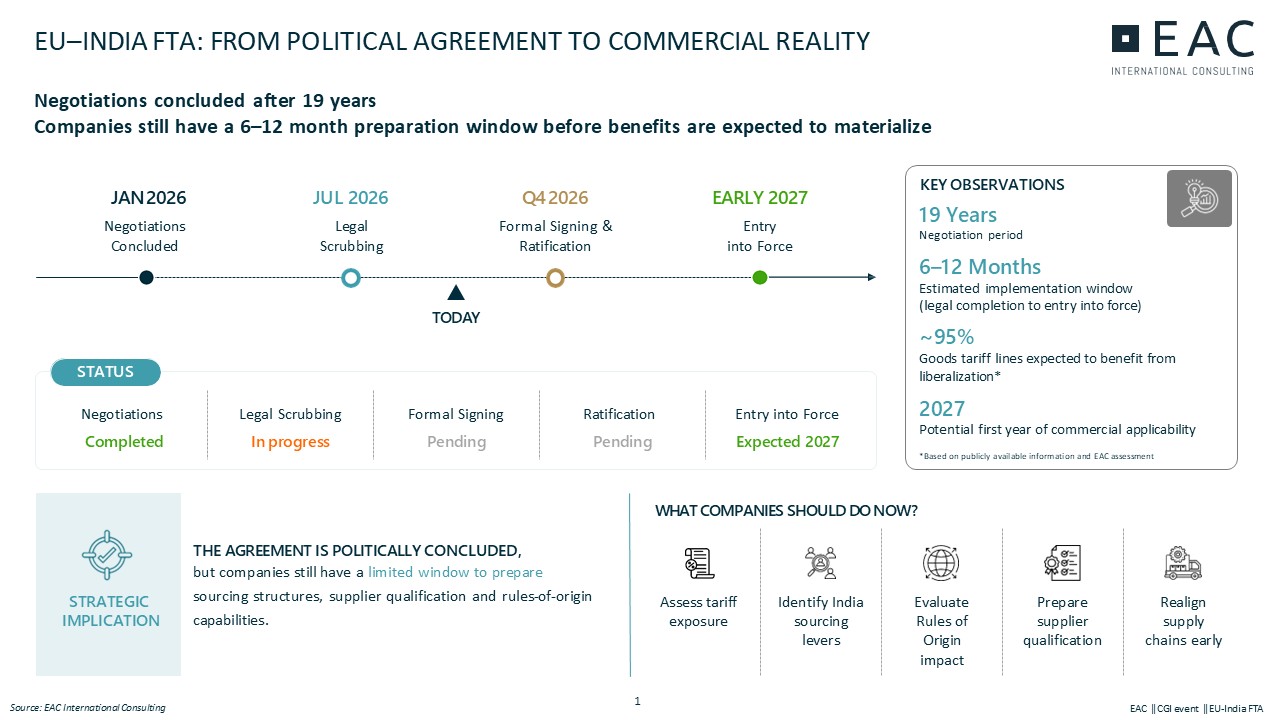
- Plan for 2027 rather than wait for it
His closing message was about speed. The benefits will not be evenly shared. They will go to companies that combine feasibility discipline, the right partners and execution readiness.
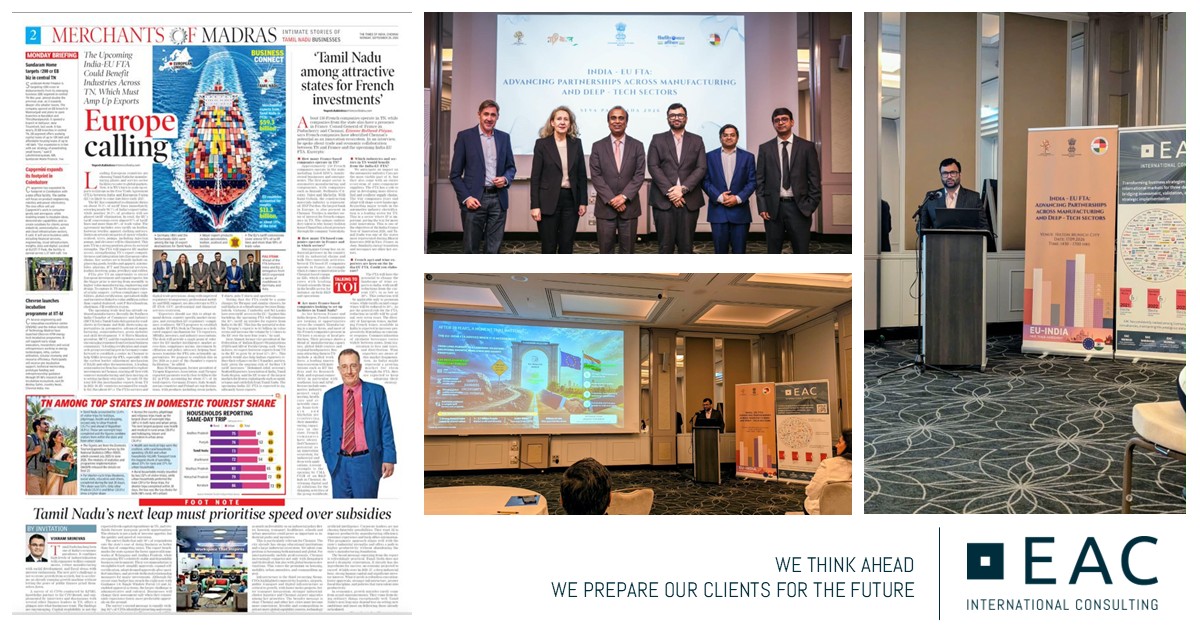
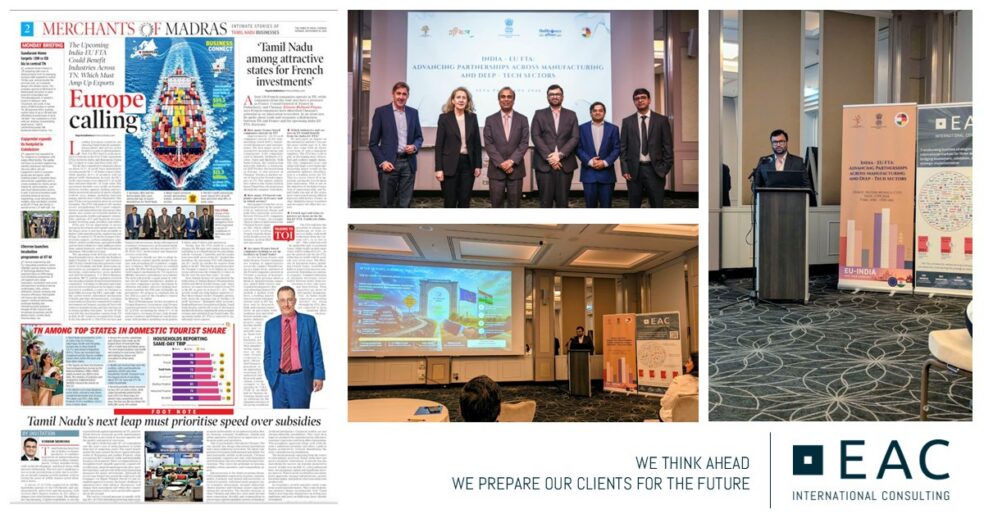
Additionally we were pleased to see the conversation travel. On 28 September 2026, the Chennai edition of The Times of India examined in its "Merchants of Madras" pages what the FTA means for industries in Tamil Nadu. It was a timely reminder that this corridor runs in both directions. Our sincere thanks go to the Consulate General of India, Munich for convening the forum, and to The Times of India for an informed coverage that brought the discussions in Europe to readers in India. Click here to read the article.
If your leadership team is weighing the same questions, we would welcome the conversation. Reach out to our teams in Munich - Rituraj Shailendra and Mumbai - Anup Barapatre, to learn more about the presentation and what the EU-India FTA could mean for your business.
Latest
India’s Maritime Transformation: Logistics, Manufacturing, and Indo‑German Collaboration
Why Hyper-Localization is the New Playbook for International Success in China

China Cost Optimization 2026 – Balancing competitiveness in a shifting landscape
India’s Industrial Decarbonisation Shift: The Emerging Role of CCUS
