
Opportunities to leverage wind supply chain shifts to China and India Asia is the key driver of growth for the wind energy sector, accounting for around 60% of new installations in 2020. Driven by the strong market, local supply chains in China and India have been developing and now offer increasingly mature & cost-effective sourcing opportunities.To remain competitive, firms along the wind supply chain should adapt their strategy to these changing market conditions. A strategic footprint development across Asia, localized product & pricing strategies as well as transparency on domestic competitors are all crucial factors that need to be considered. …
Emerging Chinese Consumer Brands

Emerging Chinese Consumer Brands What is happening to China’s domestic consumer brands?The rapid development of Chinese domestic new consumer brands has become a conspicuous phenomenon for China’s consumer market in recent two years. 2020 can be seen as the “breaking out” year for Chinese domestic brands when they started expanding rapidly by differentiation, segmentation, and regionalization. Emerging domestic consumer brands show great competitiveness when facing traditional players. Some of them even successfully beat traditional brands to become the sales champion on e-commerce platforms in their segment. For example, during the “618 shopping festival” in 2021, more than half of the …
Opportunities in the Construction Equipment Market in India

Opportunities in the Construction Equipment Market in India The construction industry in India is one of the sectors which has been resilient to COVID impact, maintaining a steady growth despite a decline in the construction activity due to lockdowns with some key industry drivers. With the influx of projects in infrastructure construction, the construction equipment industry is expected to grow at 4% in the period during 2019-26 with the equipment sales expected to reach 122 thsd units.In addition, India is poised to become one of the key export hubs on account of reforms in the emission and safety standards for …
Germany’s Supply Chain Due Diligence Act

Germany’s Supply Chain Due Diligence Act On June 11, 2021, the German Parliament passed the Supply Chain Due Diligence Act. With this law, the German government aims for greater protection of people and the environment in the global economyWhat has happened? On June 11, 2021, the German Parliament passed the Supply Chain Due Diligence Act. With this law, the German government aims for greater protection of people and the environment in the global economy. As outlined by the federal government, German companies will face a range of obligations: Companies must ensure compliance with human rights regulations among their entire supply …
Supply Chain Sustainability in Asia
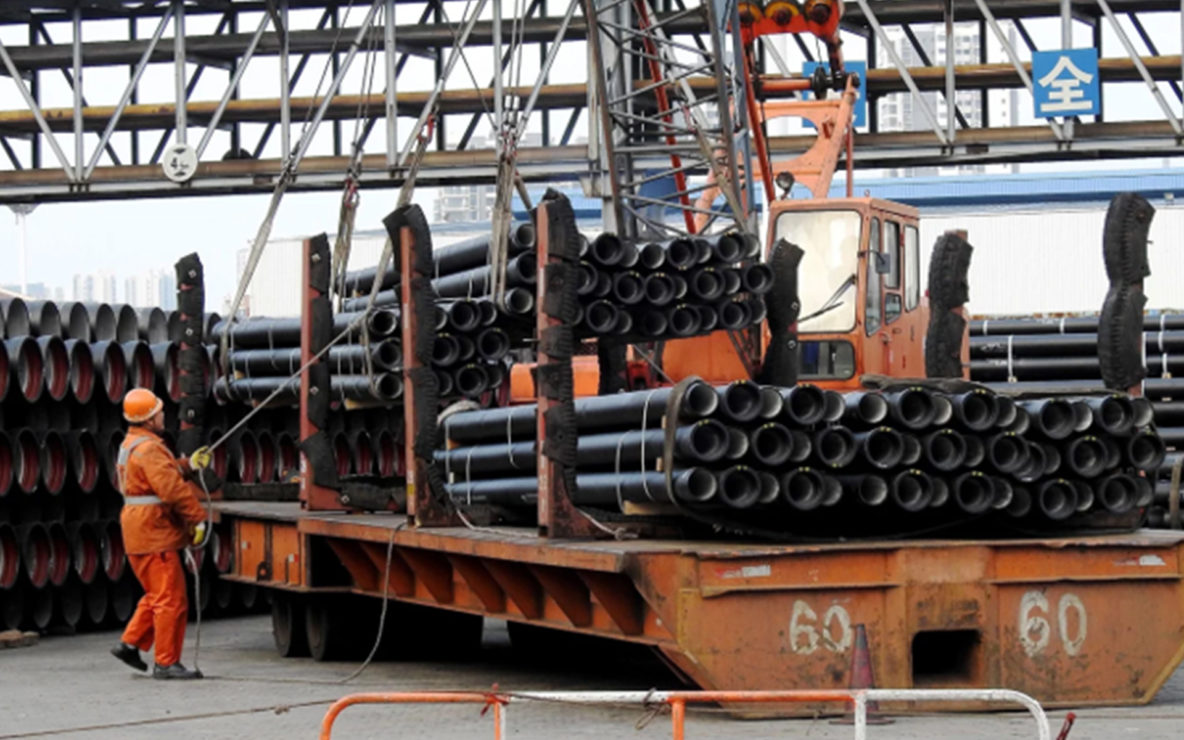
Is a changing Regulatory Landscape affecting Supply Chain Sustainability in Asia? On June 11, 2021, the German Parliament passed the Supply Chain Due Diligence Act. With this law, the German government aims for greater protection of people and the environment in the global economy. As outlined by the federal government, German companies will face a range of obligations. German companies especially need to address these requirements in their overseas activities. Having a risk management system to detect human rights or environmental law infringements is one key element. Further key questions for your company might be: Do we have full transparency …
Digital Value Creation in the B&C Industry

Digital Value Creation in the Building & Construction Industry When companies transform their business model in our digitally driven society, this impacts the entire organization – from customer acquisition and customer life-time value (CLV) management to the continuous development and marketing of new products and services. Individualized customer centricity plays a central role in digitization processes.We support companies in the B&C industry in providing an integrated link between the real and virtual worlds. This results in an optimized data and knowledge base to gain a good understanding of the multi-layered ecosystem around direct and indirect customers and their decision criteria. …
A new Green Wave? – Sustainability in China

Sustainability in China How is China performing in terms of sustainability? When it comes to sustainability or ESG (environment, social, governance) standards,China is lagging behind other countries In selected indices of Earth.Org and Yale, China is ranked 136th and 120th respectively. Furthermore, Chinese companies receive a lower sustainability rating than enterprises in developed or even other emerging economies (FTSE4good index). However China has recently announced ambitious environmental sustainability targets. The country wants to peak its CO2 emissions until 2030 and become carbon neutral by 2060. This year’s 14th Five-Year Plan includes specific targets on the reduction of CO2 and energy …
How to win in China`s E-Commerce Market

How to win in China´s E-Commerce Market? Opportunity Assessment and holistic Online Strategy China’s e-commerce landscape is highly innovative and dynamic – but fast changing business models bear risks that need to be addressed. EAC offers an innovative opportunity assessment and holistic online strategies for consumer goods companies in China’s dynamic B2C e-commerce landscape.EAC can help you to boost your China e-commerce operations by supporting you with platform prioritization, trade partner selection, organizational build-up, activation strategy, as well as implementation. Find relevant information regarding distributors, trade partners, self-operation and cooperation models as well as relevant marketing activities in our new …
Second Home Market Strategy China

Second Home Market China – is your organization empowered for future growth opportunities? The Chinese market is the major revenue driver for many enterprises. The more exposure foreign firms have in China, the more they understand that this dynamic country requires a unique strategy and market approach. For China to truly become a “second home”, MNCs need to build an organization that is supported by the headquarters and involved in global processes, while at the same time also being agile and empowered enough for quick decision-making and local execution. In order to get clarity on strategy and transformation needs, EAC …
C-Level Dialogue – Set the course now

C-Level Dialogue – set the course now for your Asia Business The Asia-Pacific region will become increasingly important by 2030. The RCEP trade agreement between will contribute to this as will China’s structural course-setting under the 14th Five-Year Plan. The government initiatives launched in India to strengthen localization and innovation also offer attractive market opportunities for German companies. Geopolitical shifts between the USA, China, India and the EU accompany the growing requirements for European companies to be able to operate successfully on a sustainable basis in these global growth markets. Does this also apply to you? Because this is exactly …
China’s Demographic Challenge

China’s Demographic Challenge Why is China facing demographics problems? From 1960 to 2015, China’s population more than doubled to around 1.4 billion people. The government tried to control this explosive growth with the One-Child Policy introduced in 1979, leading to a decline of the average fertility rate per woman from over 6 in the 1960s to 1.7 in 2020. Even the recent policy shift towards a universal two-child policy could not significantly reverse this trend. After reaching its peak in 2016, the number of new-born babies in China is expected to continue declining until 2030. Nowadays, Chinese have fewer children …
Regional Comprehensive Economic Partnership (RCEP)

Regional Comprehensive Economic Partnership (RCEP) What is the Regional Comprehensive Economic Partnership? Signed in November 2020, the RCEP is a Free-Trade Agreement between 15 countries including the ASEAN nations, China, South Korea, Japan, Australia and New Zealand. As of 2020, the member countries account for ~30% of the world’s population and ~30% of global GDP. In March 2021, China became the first signatory to ratify RCEP, around three months ahead of schedule. The agreement can be viewed as the regional answer to the failed Transatlantic Partnership and a complementation of the existing CPTPP. Its purpose is to eliminate tariff and …